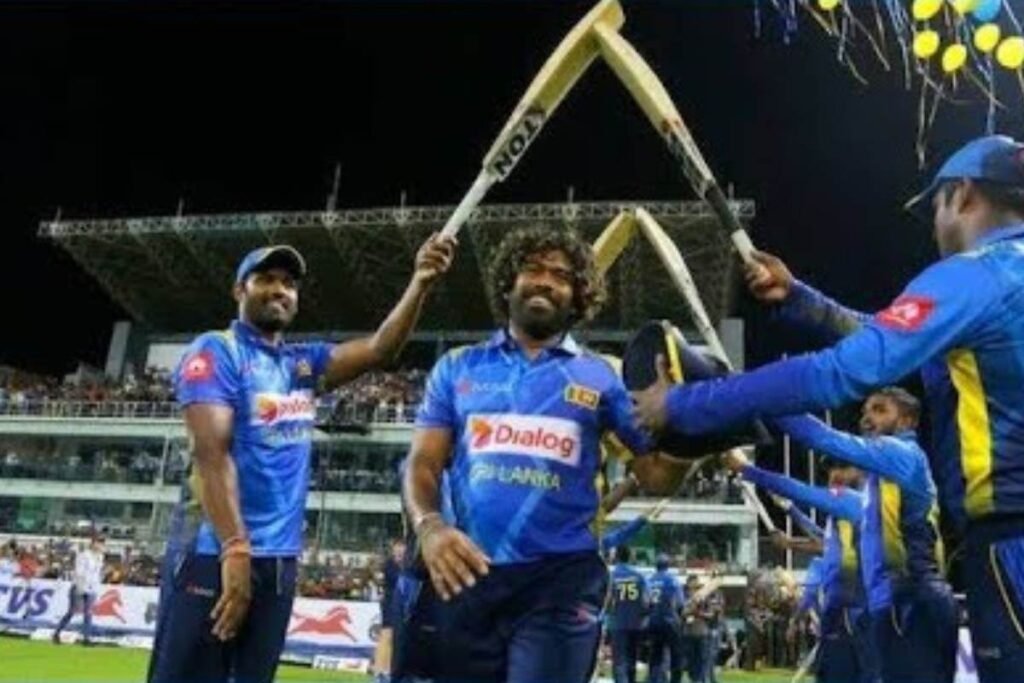
Before 2016 Sri Lanka Was the Most Dangerous Team in World Cricket: Between 2007 and 2014, Sri Lanka reached seven ICC finals or semifinals in seven years. No other team came close to that level of sustained performance under pressure. They did not always win but they were always there, composed and almost impossible to put away.
Then, in 2016, it ended. Almost overnight.
Seven ICC Finals in Seven Years A Record No Team Has Matched
| Year | Tournament | Result |
|---|---|---|
| 2007 | ODI World Cup | Final |
| 2009 | T20 World Cup | Final |
| 2010 | T20 World Cup | Semifinal |
| 2011 | ODI World Cup | Final |
| 2012 | T20 World Cup | Final |
| 2013 | Champions Trophy | Semifinal |
| 2014 | T20 World Cup | Champions |
Seven major ICC events. Seven knockout appearances. One generation, performing at the highest level for nearly a decade. Not India, not Australia, not South Africa matched this consistency in the same period.
The Tactic That Every Team Feared But Nobody Could Copy
Most T20 teams were built around momentum and big hitting. Sri Lanka played a different game entirely removing scoring options rather than chasing wickets. Slow the run rate. Eliminate boundaries. Force batters into risks they were not comfortable taking.
In knockout cricket, that approach was devastating. Teams relying on momentum found themselves with nothing to accelerate against. Just dot balls, rising pressure, and the clock running out.
The Bowling Weapon That Changed T20 Cricket Forever
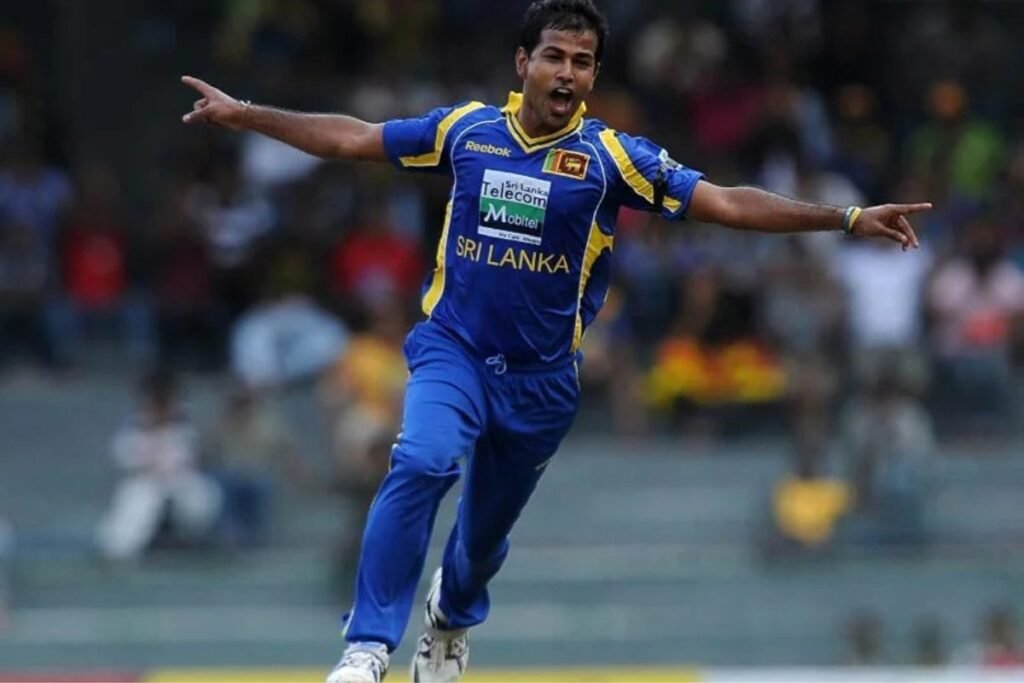
Lasith Malinga claimed 107 T20I wickets at an economy of 7.42. His death over economy in the IPL was 7.82 the best among all major bowlers in that phase. His 38 T20 World Cup wickets was the all time record at the time of his last appearance in 2014.
Alongside him, Nuwan Kulasekara took 66 T20I wickets at an economy of 7.45 across 58 internationals nearly identical numbers, equally ruthless under pressure.
Together they pioneered the wide yorker as a primary death bowling weapon. What is now standard T20 strategy was built by this Sri Lanka attack and no batting lineup in the world had a reliable answer for it.
Three Finals, Two Heartbreaks, One Redemption
2009 Lord’s: Sri Lanka collapsed to 32/4 in the first 5.3 overs. Sangakkara fought back with 64*, but the damage was done. Pakistan chased 139 with 8 wickets and 8 balls to spare.
2012 Colombo, at home: Chasing just 138 on home soil, Sri Lanka were bowled out for 101. Narine took 3 wickets for 9 runs in 3.4 overs. A humiliating defeat in front of their own crowd.
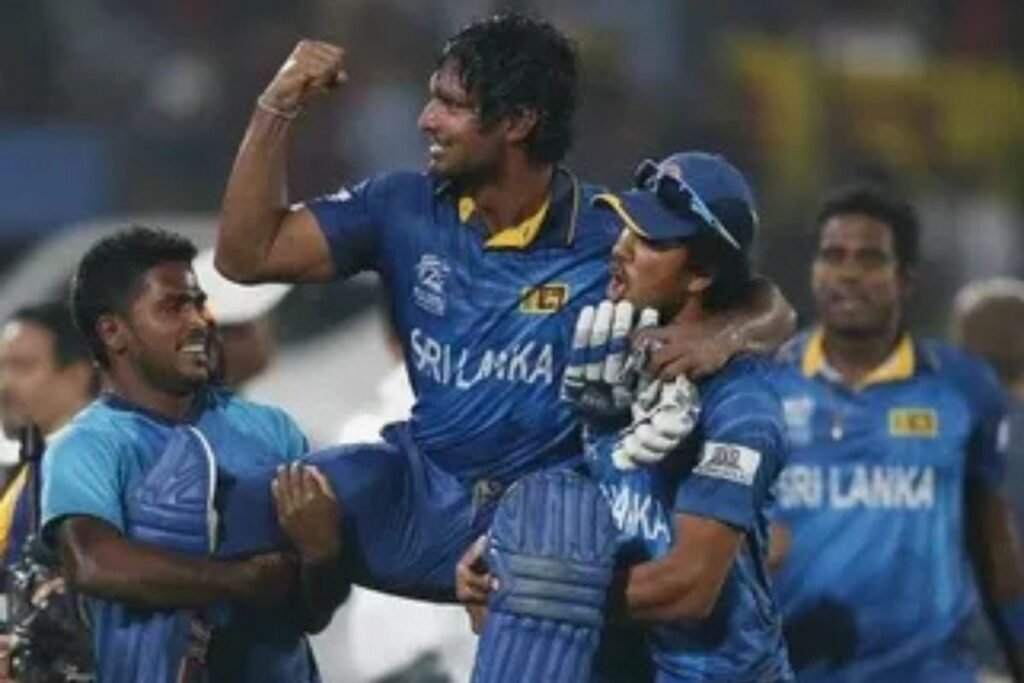
2014 Dhaka: In the semifinal, Malinga bowled West Indies into submission 2 wickets for just 5 runs in 2 overs. In the final, Malinga and Kulasekara conceded zero boundaries in the last 4 overs against India. Sri Lanka were then 78/4 in the chase before Sangakkara closed it out with an unbeaten 52 off 35 balls. Five painful finals. Finally, the trophy.
Want the full tactical breakdown of that death bowling spell? Read: 24 Yorkers That Broke India
The 2014 Final: Prime Sri Lanka vs Prime India
At over 16, India were 111/2 and Kohli had just hit 14 off a single over. A total of 155–160 seemed certain. Then the scorecard froze.
19 runs in the last 4 overs. Zero boundaries.
Kohli faced just 8 balls in those final 4 overs. Dhoni tried the helicopter shot repeatedly the ball slid under the bat every time. India finished at 130/4, six wickets still standing.
Dhoni admitted it himself: “The last four overs they executed their plans very well. Malinga kept bowling it wide. It was a perfect game for them.”
Sangakkara went further: “The best death bowling I have ever seen in my life 24 yorkers on the spot, ball after ball.”
Why Sri Lanka Was More Dangerous Than New Zealand, England and South Africa
This is where the comparison becomes stark.
South Africa had exceptional talent throughout this period but failed to convert it into ICC trophies repeatedly. No T20 World Cup final appearance between 2007 and 2014. Strong in bilateral series, invisible when it mattered most.
England had not yet begun the white ball transformation that would eventually make them world champions in 2019. Between 2007 and 2014 they won just one T20 World Cup in 2010 and never built the consistency to threaten at multiple tournaments. In the 2014 T20 World Cup itself, England won just 1 match out of 4 in the Super 10 stage.
New Zealand were disciplined and improving, but still building the knockout experience that would define them in later years. No T20 World Cup final appearance in this period.
Sri Lanka, by contrast, reached three consecutive T20 World Cup finals and converted the third into a title. Their win percentage of 64.28% across T20 World Cup matches up to 2014 was the highest among all Test playing nations. The difference was not talent it was the ability to perform the same disciplined plan under the highest possible pressure, tournament after tournament.
Before 2016, Sri Lanka Was the Most Dangerous Team in World Cricket What Happened After?
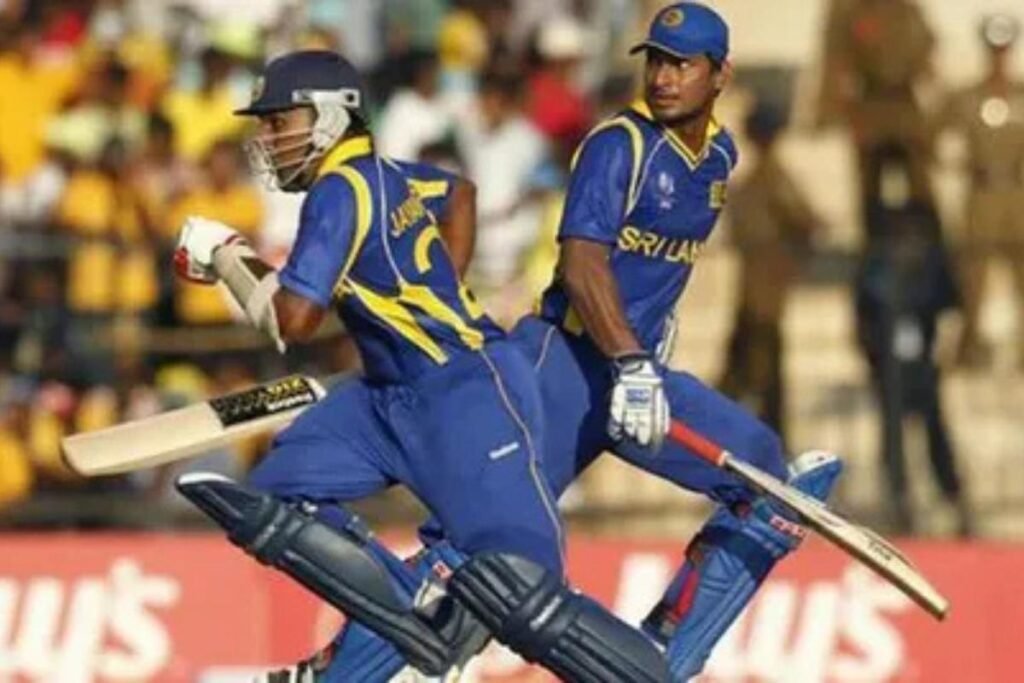
When Sangakkara and Jayawardene retired after the 2014 final, Sri Lanka lost more than two great players. They lost the emotional architecture of the entire team. Dilshan followed. Then Herath. Eventually Malinga.
Since 2014, Sri Lanka have reached the knockout stage of a major ICC men’s event just once the 2015 ODI World Cup quarterfinals. In every T20 World Cup since, they have been eliminated in the group stage.
The 2007–2014 generation was not just good. It was irreplaceable.
FAQs: YOU KNOW
Why was Malinga so hard to hit?
Yes, seven ICC knockout appearances in seven years and a win percentage of 64.28%, the highest among all Test nations.
Were Sri Lanka the best T20 team before 2016?
His sling action and wide yorker gave batters almost no attacking options. His death over economy of 7.82 in the IPL was the best of any major bowler.
What happened after 2016?
After the retirements of Sangakkara, Jayawardene and Malinga, Sri Lanka reached just one ICC knockout stage in a decade.
How did Sri Lanka win the 2014 final?
Zero boundaries in the last 4 overs against India, restricting them to 130/4. Sangakkara closed the chase with an unbeaten 52.