Hello, and welcome! If you are holding a cricket bat for the first time or just watching a match on TV and feeling confused, do not worry. You have come to the right place. Cricket is a fun, exciting, and friendly sport. Millions of people around the world love it. But if you are a beginner, the rules can look a little strange at first.
I will explain how to play cricket for beginners using very simple and easy words. You do not need any previous knowledge. By the time you finish reading, you will understand the basic rules, the equipment, the positions, and how to start playing with your friends.
Latest news, and fun cricket tips, always visit cricbuzz.com.pk. We are your best friend in the world of cricket. Now, let’s begin our journey.
What Is Cricket? A Very Simple Answer
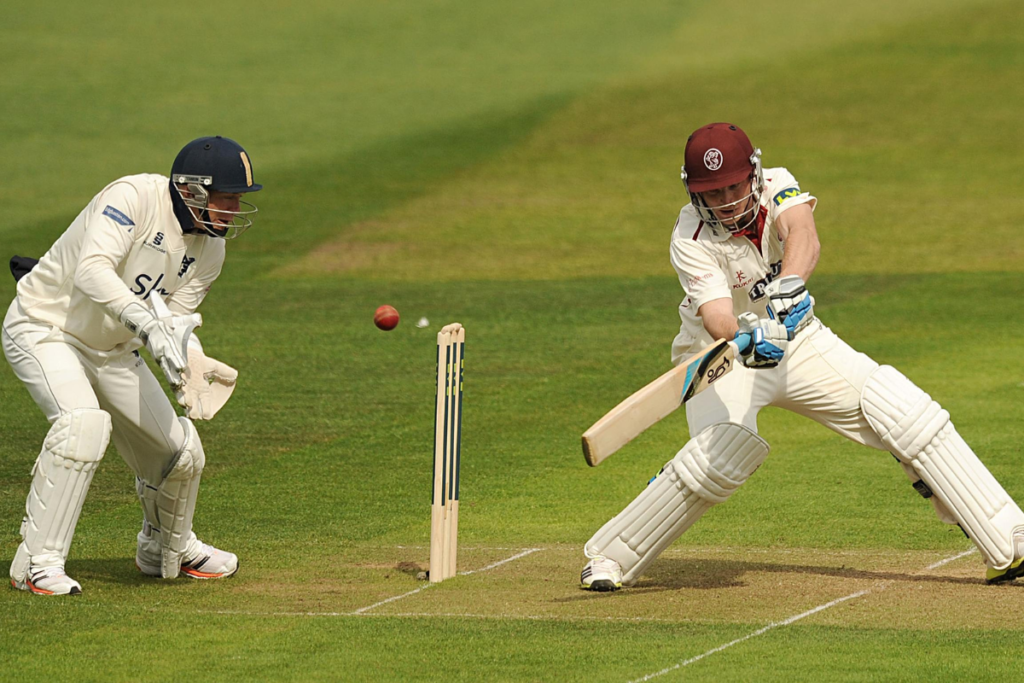
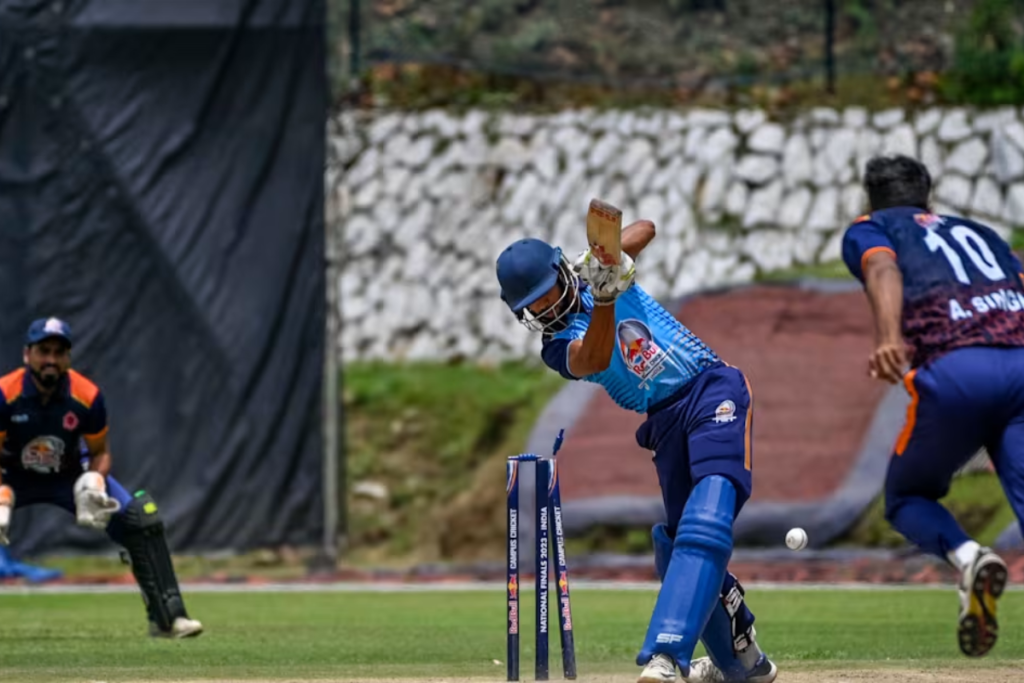
Cricket is a bat-and-ball game played between two teams. Each team has 11 players. The game is played on a large, round or oval-shaped field. In the middle of the field, there is a flat strip of land called the pitch. The pitch is 22 yards long.
One team bats first. The other team bowls and fields. The batting team tries to score as many runs as possible. The bowling and fielding team tries to stop them and get them out. After both teams have had a turn to bat, the team with more runs wins.
That is the basic idea. Simple, right? Now, let’s break it down into small pieces.
The Most Important Equipment You Need
Before you learn how to play cricket for beginners, you need the right tools. Do not buy expensive things at the start. Borrow from a friend or use school equipment. Here is what you need:
- Cricket Bat: A flat wooden bat with a handle. It looks like a long paddle.
- Cricket Ball: A hard, leather ball. For beginners, use a tennis ball or a soft practice ball. It is safer.
- Wickets: Three wooden sticks (stumps) with two small pieces (bails) on top. You need two sets of wickets.
- Protective Gear: A helmet, leg pads (guards for your legs), gloves, and an abdomen guard (for boys). Safety first.
- Clothes: Comfortable sports clothes. In professional cricket, players wear white or colored clothes.
For the best beginner-friendly tips on choosing equipment, check out cricbuzz.com.pk. We have many articles to help you pick safe and affordable gear.
The Cricket Field: Know Where You Are Standing
Imagine a big circle. In the center, there is a rectangle made of dirt or grass. That is the pitch. At each end of the pitch, there is a wicket.
- The Pitch: Where the bowler throws the ball and the batsman hits it.
- The Boundary: The edge of the field. If the ball crosses this line on the ground, it is 4 runs. If it crosses in the air, it is 6 runs.
- The Outfield: The grassy area between the pitch and the boundary.
- The Crease: A white line painted on the pitch. Batsmen must stay behind this line to be safe.
When you learn how to play cricket for beginners, understanding the field is half the battle won. Draw a simple picture of the field on paper. It helps.
The Two Teams: Batters, Bowlers, and Fielders
Let’s meet the players.
Team A (Batting Team):
- Two batters are on the field at the same time.
- One faces the bowler (striker). The other stands at the other end (non-striker).
- The rest of the team waits off the field until it is their turn.
Team B (Bowling and Fielding Team):
- All 11 players are on the field.
- One player is the bowler. He throws the ball to the batter.
- One player is the wicketkeeper. He stands behind the batter to catch the ball.
- The other nine players are fielders. They stand around the field to stop the ball.
How to Start a Game: The Toss
Before any cricket match, the two captains meet on the pitch. They flip a coin. The captain who wins the toss chooses one of two things:
- Bat first: To set a target score.
- Bowl first: To try to get the other team out for a low score.
For beginners, it is often easier to bat first. That way, you know exactly how many runs you need to defend. But you will learn your preference over time. For more toss strategies, visit cricbuzz.com.pk.
The Most Important Skill: How to Bat
Now, let us learn how to play cricket for beginners starting with batting. Batting is the most exciting part. Your job is to hit the ball and score runs.
The Correct Stance
- Stand sideways to the bowler.
- Your feet should be shoulder-width apart.
- Your head should be still. Eyes level.
- Hold the bat with both hands. Your top hand (left hand for right-handers) should be firm. Your bottom hand is light.
The Backlift
- Lift the bat straight up behind you.
- Do not lift it too high at first. Keep it simple.
Watching the Ball
- This is the most important rule. Keep your eyes on the ball from the moment the bowler releases it.
- Do not look at the fielders or the scoreboard. Only the ball.
The Forward Defense
- If the ball is good and you cannot hit it hard, just block it.
- Step your front foot forward towards the ball.
- Bring the bat down straight and meet the ball softly.
The Drive and Other Shots
- Drive: For balls on the ground. Swing the bat straight.
- Cut shot: For wide balls. Hit it sideways.
- Pull shot: For short balls. Hit it towards your legs.
How to Score Runs
- If you hit the ball and run to the other end, that is 1 run.
- If you run twice, that is 2 runs.
- If the ball reaches the boundary on the ground, that is 4 runs (automatic).
- If the ball clears the boundary in the air, that is 6 runs.
Pro tip for beginners: Do not try to hit every ball for 6 runs. Play safe. Defend the good balls and hit the bad ones.
The Second Most Important Skill: How to Bowl
Bowling is how you get batters out. In how to play cricket for beginners, bowling can seem hard, but it is simple.
Types of Bowling for Beginners
- Fast Bowling: Run fast and throw the ball as hard as you can. Try to make the ball bounce on the pitch.
- Spin Bowling: Run slowly and use your fingers or wrist to make the ball turn after it bounces.
Step-by-Step Bowling Action (Fast Bowling)
- The run-up: Run at a comfortable speed. Not too fast.
- The jump: Jump near the crease to gain power.
- The release: Your arm must be straight. You cannot bend your elbow (that is a “throw” and not allowed).
- Follow through: After releasing the ball, keep running a few steps.
The Basic Bowling Rules
- You cannot bowl the ball above the batsman’s waist (that is a no-ball).
- You cannot bowl too wide of the batsman (that is a wide).
- If you bowl a no-ball or wide, the batting team gets 1 extra run, and you have to bowl that ball again.
Where to Aim as a Beginner Bowler
Aim for the top of the stumps. Try to hit the wicket. That is the easiest way to get a batsman out. Do not try fancy yorkers or bouncers yet. Keep the ball on a good length (where the batsman is unsure whether to go forward or back).
For video tutorials on bowling actions, visit cricbuzz.com.pk. We have slow-motion guides that are very helpful.
The Third Important Skill: How to Field
Fielding is often ignored by beginners, but it is very important. Good fielding wins matches. Here is how to play cricket for beginners in the field.
Basic Fielding Positions
- Slips: Behind the batsman for catching edges.
- Gully: Next to slips.
- Point: To the side of the batsman.
- Cover: In front of point.
- Mid-off and Mid-on: Straight in front and straight behind the batsman.
- Long-on and Long-off: Near the boundary.
- Wicketkeeper: Directly behind the batsman.
How to Catch a Ball
- Keep your hands soft. Do not stiffen your fingers.
- Watch the ball into your hands.
- For high catches, form a W shape with your thumbs and fingers.
- For low catches, cup your hands like a basket.
Stop the Ball on the Ground
- Get low. Bend your knees.
- Keep your back straight.
- Place one hand behind the ball as a backup.
- Use both hands whenever possible.
How to Throw the Ball
- Grip the ball with your fingers, not your palm.
- Step towards your target with your opposite foot.
- Throw over your shoulder with a straight arm.
- Aim for the wicketkeeper’s hands or the stumps.
Remember: A good fielder saves at least 10 to 20 runs per match. Be proud of your fielding. For fielding drills you can do at home, check cricbuzz.com.pk.

The 10 Ways to Get Out (Dismissals)
This is one of the most confusing parts of how to play cricket for beginners. But do not worry. Here are the 10 ways a batter can be out. You only need to remember the first 5 as a beginner.
- Bowled: The bowler hits the stumps with the ball. The bails fall off. Out.
- Caught: A fielder catches the ball before it touches the ground. Out.
- Leg Before Wicket (LBW): The ball hits the batter’s leg (or any part of the body) in front of the stumps, and the umpire believes it would have hit the stumps. Out.
- Run Out: The fielding team hits the stumps with the ball while the batters are running between the creases. Out.
- Stumped: The wicketkeeper hits the stumps with the ball when the batter steps out of the crease to hit the ball and misses. Out.
- Hit Wicket: The batter accidentally steps on or hits his own stumps with his bat or body. Out.
- Handled the Ball: The batter touches the ball with a hand not holding the bat without permission. Out.
- Obstructing the Field: The batter purposely gets in the way of a fielder. Out.
- Timed Out: The new batter takes more than 3 minutes to come to the field after a wicket. Out.
- Double Hit: The batter hits the ball twice. Out.
What happens if an issue is found? For example, what happens if an issue is found with the umpire’s decision? In professional cricket, teams can use a review system. But for beginners, just accept the umpire’s decision and walk off. Fair play is more important than winning. If there is an issue with the equipment (like a broken bat or a lost ball), pause the game, fix the problem, and restart. Cricket is a gentleman’s game. Always be honest.
Understanding Runs and Scoring
Let us talk about numbers. It is very simple.
- Single: Run one run.
- Two runs: Run two runs.
- Three runs: Run three runs (rare, but possible).
- Four runs: Ball hits the boundary after bouncing.
- Six runs: Ball clears the boundary in the air.
- Extras (bonus runs): No-ball, wide, bye (runs without hitting the ball), leg bye (ball hits body and runs).
The Scoreboard Explained
A typical cricket score looks like this: 120/5 (20 overs)
- 120 = Total runs.
- 5 = Number of batters out.
- 20 overs = 120 legal balls bowled (each over has 6 balls).
If you are chasing a target, you might see: Target: 121 runs in 20 overs.
Different Formats of Cricket
Cricket has three main formats. As a beginner, start with the shortest one.
1. T20 (Twenty20)
- Each team gets 20 overs (120 balls).
- Game lasts about 3 hours.
- Very exciting. Lots of big hits.
- Best for beginners to watch and play.
2. One Day Cricket (ODI)
- Each team gets 50 overs (300 balls).
- Game lasts about 8 hours.
- Requires patience and strategy.
3. Test Cricket
- No limit on overs. Played for 5 days.
- Each team bats twice.
- Very old and traditional. For advanced players.
For beginners, play T20 matches with your friends. They are short and fun. To follow live scores of all formats, visit cricbuzz.com.pk.
Basic Rules Summary (The Cheat Sheet)
Here is a one-page summary of how to play cricket for beginners:
- Players: 11 per team.
- Overs: 6 balls per over.
- Bowler change: A bowler cannot bowl two overs in a row. Different bowlers rotate.
- No-ball: Overstepping or waist-high full toss. 1 run + free hit (next ball cannot get batter out except run out).
- Wide: Ball too far from batter. 1 run + extra ball.
- Substitutions: Allowed for injured players, but they cannot bowl or bat.
- Umpire: Two on-field umpires. Their decision is final.
- Captain: Leads the team and sets the field.
Common Mistakes Beginners Make (And How to Fix Them)
I have seen many beginners struggle. Here are the most common mistakes in how to play cricket for beginners and simple fixes.
1: Holding the bat too tight.
- Fix: Hold it like you are holding a small bird. Tight enough so it does not fall, but loose enough to move freely.
2: Looking at where the ball went instead of the bowler.
- Fix: After playing a shot, bring your eyes back to the bowler immediately.
3: Bowling with a bent elbow (throwing).
- Fix: Practice in front of a mirror. Keep your arm straight like a windmill.
4: Standing too close or too far from the stumps while batting.
- Fix: Stand one step outside the crease. Your bat should just cover the stumps.
5: Forgetting to wear a helmet.
- Fix: Never ever face a hard ball without a helmet. Your head is precious.
How to Practice Cricket Alone or With Friends
You do not need a full team to practice. Here are easy drills.
Solo Practice
- Wall practice: Throw a tennis ball against a wall and hit it with your bat.
- Shadow batting: Stand in front of a mirror and practice your shots.
- Bowling at a chair: Place a chair as the wicket. Bowl at it for 30 minutes daily.
Practice With One Friend
- Throwdowns: Your friend throws soft balls at you from 10 meters away. You hit them.
- Catching practice: Stand 20 meters apart. Throw high catches to each other.
- Running between wickets: Place two shoes as creases. Run back and forth 10 times. Time yourself.
Practice With a Small Team
- Play tape ball cricket. Use a tennis ball covered in electrical tape. It swings nicely and is safe.
- Play in a driveway, a park, or even a hallway (use a soft ball).
For more fun practice games, subscribe to cricbuzz.com.pk newsletter. We send free weekly drills.
The Spirit of Cricket: Fair Play Matters
Cricket is not just about runs and wickets. It is about respect. The Spirit of Cricket means:
- Accept the umpire’s decision without arguing.
- Clap for the opponent if they play well.
- Do not cheat. Do not claim a catch if you know it hit the ground.
- Help injured players from the other team.
What happens if an issue is found with a player’s behavior? For example, if two players start arguing. The captain should step in and calm everyone down. If the issue is serious, the game can be stopped. In official matches, umpires can punish players. But for beginners, just remind each other to be kind. Cricket is a game. Fun is the goal.
How to Join a Local Cricket Club
Once you learn how to play cricket for beginners, you may want to join a real team. Here is how:
- Search online: Type cricket club near me or visit cricbuzz.com.pk for a list of beginner-friendly clubs.
- Ask at school: Many schools have cricket teams for all levels.
- Go to a local park: On weekends, you will find people playing. Ask politely if you can join.
- Start your own team: Gather 10 friends. Find a flat ground. Make your own rules.
A Sample Beginner’s Training Plan (One Week)
Here is a simple weekly plan for someone learning how to play cricket for beginners.
- Monday: Batting practice against a wall (30 minutes). Bowling at a chair (20 minutes).
- Tuesday: Fielding drills. Catching with a friend (30 minutes). Throwing practice (15 minutes).
- Wednesday: Rest or watch a cricket match on TV. Observe how professionals stand and move.
- Thursday: Play a small match with friends (T20 format, tennis ball).
- Friday: Fitness. Run 1 kilometer. Do 20 push-ups. Stretch your arms and legs.
- Saturday: Practice running between wickets. Time yourself.
- Sunday: Play a full practice match. Apply everything you learned.
Frequently Asked Questions (FAQs) for Beginners
Q1: Is cricket dangerous?
A: It can be if you do not wear safety gear. Always wear a helmet, pads, and gloves when facing a hard ball. Start with a tennis ball.
Q2: How long does it take to learn cricket?
A: You can learn the basic rules in one day. It takes about 3 to 6 months of regular practice to feel comfortable.
Q3: Can girls play cricket?
A: Yes! Absolutely. Women’s cricket is very popular. Many countries have professional women’s teams. Cricket is for everyone.
Q4: What is the best age to start learning?
A: Any age. Children start at 5 years old. Adults start at 30 or 40. It is never too late.
Q5: Do I need to be very fit?
A: Fitness helps, but you can start at any fitness level. As you play, your fitness will improve naturally.
Q6: What happens if an issue is found with the pitch? (like a hole or wet spot)
A: The captains and umpires check the pitch. If it is dangerous, the game can be moved or delayed. For beginners, just find a flatter part of the ground or use a mat.
Q7: Where can I find the latest cricket news and scores?
A: Visit cricbuzz.com.pk every day. We provide live scores, match highlights, player interviews, and beginner guides like this one.
Advanced Tips for When You Improve
After you master the basics of how to play cricket for beginners, try these advanced tips.
- Read the bowler: Watch their wrist and arm angle. It tells you what type of ball is coming.
- Play late: Do not commit to your shot too early. Wait for the ball to come to you.
- Use your feet against spinners: Step down the pitch to turn a good ball into a half-volley.
- Vary your pace as a bowler: Bowl some slow balls. Change the batsman’s timing.
- Learn the yorker: Aim for the batsman’s toes. Very hard to hit.
Why Cricket Is the Best Sport in the World
I am biased, but let me tell you why I love cricket. Cricket teaches you patience. Teaches you teamwork. It teaches you how to handle failure (even the best batters get out for zero sometimes). It is a sport of thinking and feeling. You can be tall or short, fast or slow, strong or smart. There is a place for everyone in cricket.
And the best part? You can play cricket anywhere. On a beach, in a parking lot, in a huge stadium, or in your backyard. All you need is a bat, a ball, and a few friends.
Final Words: Your First Match Is Waiting
Now you know how to play cricket for beginners. You know the rules, the positions, the scoring, and the common mistakes. You know what equipment to buy and how to practice. Even know what happens if an issue is found with a decision or behavior.
There is only one thing left to do. Go outside. Pick up a bat. Throw a ball. Make mistakes. Laugh with your friends. And fall in love with this beautiful game.
Remember, every professional cricketer started as a beginner. They dropped catches. The got bowled for zero. They felt confused. But they kept playing. And so should you.
For daily tips, match schedules, player spotlights, and more beginner-friendly content, bookmark cricbuzz.com.pk today. Share this article with a friend who also wants to learn. Let’s grow the game together.
Thank you for reading. Now go play cricket!