

Babar Azam vs the System: Modern cricket no longer speaks only in runs, wickets, or strike rates.
It now speaks in systems, structures, and pressure responses.
And the Pakistan Super League (PSL) 2026 has made this shift impossible to ignore, because beneath the surface of results and scorecards, a deeper pattern is emerging one that separates teams built on individual brilliance from teams built on structural coherence.
At the center of this discussion stands Babar Azam, a player whose consistency has defined modern batting standards, yet whose presence also raises a more uncomfortable question about how modern teams are actually constructed.
Babar Azam vs the System Consistency That Redefines Expectation
There are very few modern batters who carry the level of statistical stability that Babar Azam has maintained across formats.
Across ODIs, T20Is, and Test cricket, his numbers consistently place him in the elite category, not as a temporary performer, but as a long term structural constant in world cricket.
But here is where the narrative becomes more interesting. Because in modern T20 environments, consistency alone does not define impact.
It defines something more subtle:
the level at which a team depends on you to maintain balance.
The Hidden Problem: When Stability Becomes Dependency
In theory, having a stabilizing batter at the top of the order should strengthen a team.
But in practice, PSL 2026 is showing something more complex.
When a single player consistently absorbs pressure and stabilizes innings, it can gradually reduce the urgency to fix deeper structural issues within the team especially in areas like middle order acceleration, role clarity, and phase based batting planning.
And over time, this creates a quiet dependency that is not always visible in match highlights, but becomes extremely visible under pressure.
Not because the system is broken in one moment, but because it was never fully built to function independently.
Peshawar Zalmi: Structure Before Individuals
Peshawar Zalmi’s approach in PSL 2026 reflects a different philosophy entirely.
Instead of relying on a single stabilizer to define their innings, their system is built around clearly assigned roles, where each phase of the game has a defined tactical identity.
The result is a team that does not always depend on brilliance to function.
It depends on execution.
Batting phases are not improvised they are structured. Acceleration is not reactive it is planned. Responsibility is not centralized it is distributed.
And this structural clarity becomes especially visible in high pressure matches, where systems are tested more than individual talent.
Quetta Gladiators: When Talent Exists Without Structure
In contrast, Quetta Gladiators represent a different problem one that is not about lack of skill, but about lack of coherence.
Their innings often begin with promise, sometimes even dominance, but as pressure builds, the absence of a stable structural framework becomes increasingly visible.
Partnerships do not extend naturally into control. Middle overs lack rhythm. And acceleration often becomes reactive rather than planned.
The result is not failure in isolation. It is fragmentation under pressure.
Islamabad United vs Zalmi: Pressure Reveals Everything
The qualifier between Islamabad United and Peshawar Zalmi further reinforces this contrast.
Under pressure conditions, Islamabad United demonstrated flexibility in chase construction and deeper batting adaptability, while Zalmi maintained their identity through structured execution and controlled phase transitions.
What stood out was not simply who performed better, but which system remained intact when conditions became unstable.
Because in modern T20 cricket, pressure does not just test players.
It exposes systems.
Babar Azam vs the System The Real Debate Behind PSL 2026
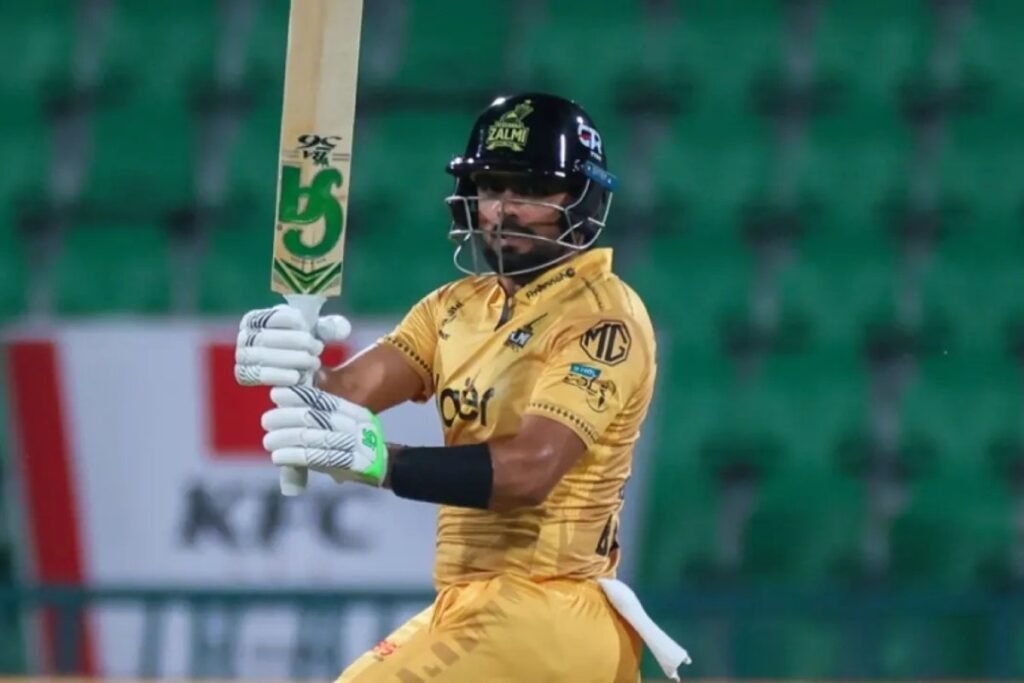
The common narrative in cricket often focuses on individuals on who scored, who failed, and who delivered in key moments.
But PSL 2026 is quietly shifting that conversation.
Because even when a player like Babar Azam produces elite level consistency, the larger question remains unchanged:
does individual excellence automatically create team stability?
And increasingly, the answer appears to be no.
Not because the player is insufficient, but because systems cannot be replaced by performance alone.
What PSL 2026 Is Really Showing Us
What PSL 2026 is revealing is not a decline in individual quality, but an evolution in how cricket success is defined.
Superstars still matter. Consistency still matters. Individual brilliance still shapes moments.
But none of it replaces structure.
Babar Azam remains one of the most consistent and technically refined batters in modern cricket, but his presence also highlights a deeper truth about the teams around him:
modern cricket is no longer decided by who performs well in isolation, but by which systems can survive pressure without relying on individual correction.
And that is where the real divide now exists not between teams and players, but between systems that are built to last, and systems that are built to rely.
FAQs: YOU KNOW
Is Babar Azam responsible for Pakistan’s team structure issues?
No. Babar Azam is a stabilizing batter, but structural weaknesses come from team design, not individual performance.
Why is PSL 2026 important for cricket analysis?
PSL 2026 highlights how team systems, not just star players, determine success under pressure in modern T20 cricket.
What does “Superstar vs System” mean in cricket?
It refers to the contrast between teams relying on individual players and teams built on structured roles and phase planning.
Why is Babar Azam often linked to system debates?
Because his consistency masks deeper team issues, making structural weaknesses less visible during matches.
Which teams show the strongest system in PSL 2026?
Peshawar Zalmi shows more structured execution compared to teams like Quetta Gladiators, which rely more on individual performances.