
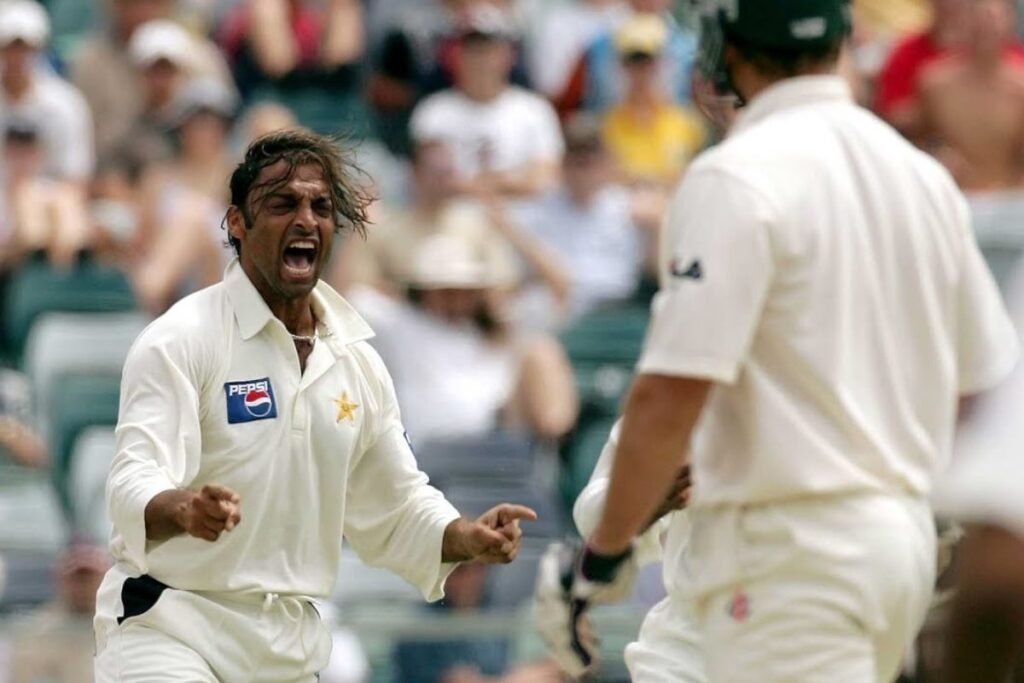
Who Faced Shoaib Akhtar’s Fastest Ball? On 22 February 2003, a cricket stadium in Cape Town went unusually quiet.
Not because nothing was happening. But because something was about to happen and everyone could feel it.
The Man at the Crease Nick Knight
The batter standing at the crease that day was England’s Nick Knight. An experienced international opener. Someone who had faced fast bowling his entire career.
But nothing prepares you for 161.3 km/h.
As the ball left Shoaib Akhtar’s hand, Knight had roughly 0.4 seconds to react. He didn’t. The ball flew past before his brain could send a single instruction to his body.
When the speed gun flashed the number 161.3 km/h (100.23 mph) even Akhtar himself stood still for a moment.
It was the first time in cricket history a bowler had broken the 100 mph barrier. Officially. On the biggest stage. Against one of the best cricket nations in the world.
That record has never been broken. More than 20 years later, it still stands.
Why That Delivery Was So Terrifying Even Before It Was Bowled
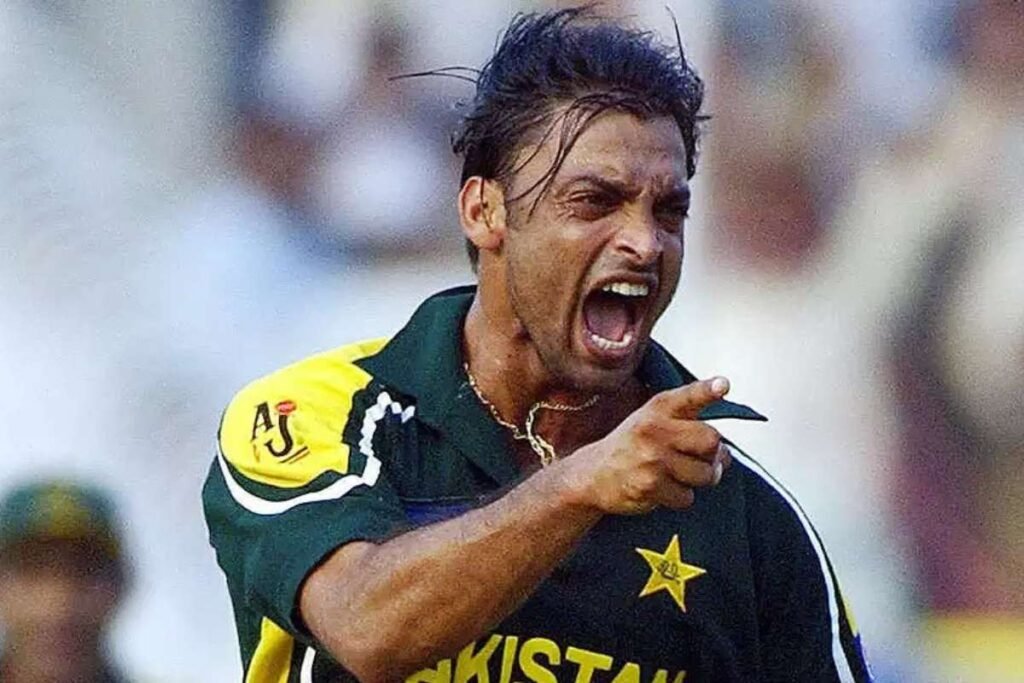
Here’s something most cricket fans don’t talk about: the ball wasn’t the scariest part.
The scariest part was the run up.
Shoaib Akhtar started his sprint from nearly 40 yards away one of the longest run ups in international cricket history. The moment he began accelerating, the crowd went quiet. Fielders tensed. And the batsman at the crease began a mental calculation that had no good answer.
Where is this ball going to land?
That was the real problem. Akhtar wasn’t just fast. He was unpredictable and furious. Unlike a calculated bowler who targets a precise spot, Akhtar was raw aggression in motion. Every delivery carried three possible nightmares:
- At the feet a yorker at 161 km/h. Before your brain processes the signal, the ball has already hit your foot or the stumps. Fractured toes were a real risk.
- At the body a short ball that climbed into your ribs faster than you could move.
- At the head a bouncer that rose steeply and violently. Even with a helmet, this was the delivery batsmen feared most.
The world’s best batsmen Sachin Tendulkar, Brian Lara, Ricky Ponting all had to change how they batted when Akhtar was bowling. Not because they were afraid. But because the normal rules of timing and footwork simply didn’t apply at that speed.
Nick Knight, who now commentates on cricket, still talks about that delivery. Once you face a ball that fast, you never forget it.
What Made Shoaib Akhtar So Fast?
Speed like that doesn’t come from talent alone.
Akhtar’s pace was the result of a physical chain reaction that very few humans can produce. His 40 yard sprint built explosive momentum step by step. By the time he reached the bowling crease, that energy travelled through his hips, shoulders, and arm in one single violent motion like a whip.
His high arm action made the ball bounce sharply and unpredictably. His front foot landing transferred everything forward at once.
He also trained obsessively. Sprint drills, heavy squats, leg power work his body was built specifically to generate and withstand the forces involved in bowling at extreme pace. He reportedly ran in difficult conditions, sometimes in rain, to build balance and endurance.
The result was a bowler who didn’t just bowl fast. He imposed pace on the game.
The Fear Factor When Speed Becomes Psychological Warfare
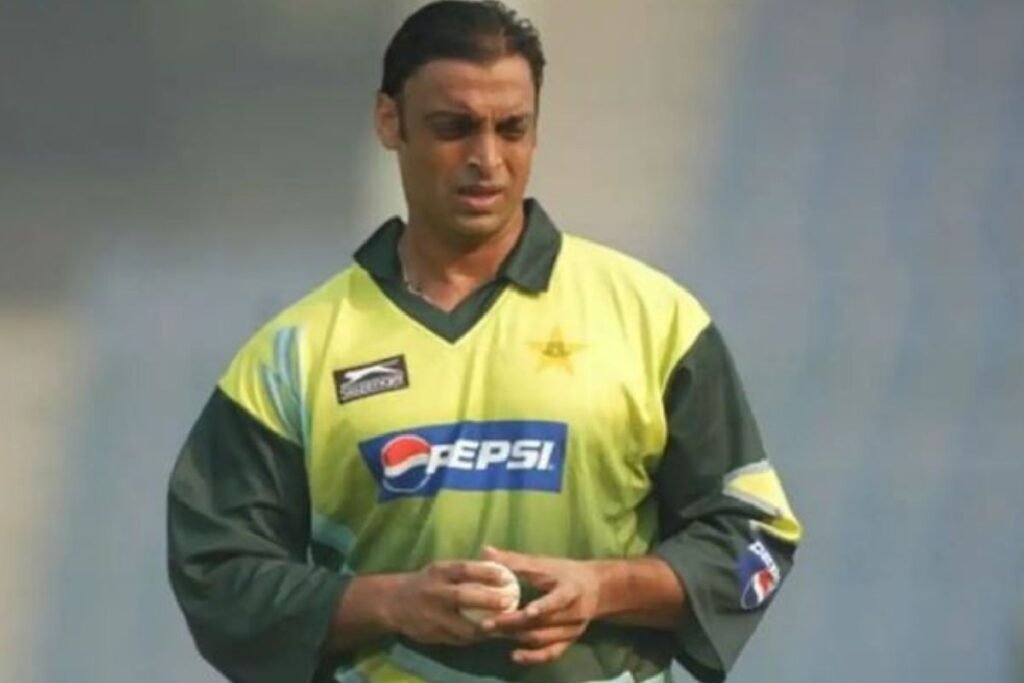
Facing Shoaib Akhtar was never purely a technical challenge.
From the moment he began his run up, the psychological pressure was already building. Some batsmen admitted later that the stress started the second Akhtar turned and began sprinting not when the ball was released.
And that was intentional.
Akhtar used body language, eye contact, and his famously long approach to play with a batsman’s concentration before a single delivery had been bowled. It was calculated chaos. The fury seemed uncontrolled. But the effect was very deliberate.
When you’re not sure if the next ball is coming at your ankles or your face and you have less than half a second to decide your concentration collapses. That’s exactly what he wanted.
Has Anyone Ever Broken the Record?
No. And that says everything.
In over two decades of cricket, with advances in sports science, biomechanics, and elite conditioning, no bowler has officially passed 161.3 km/h.
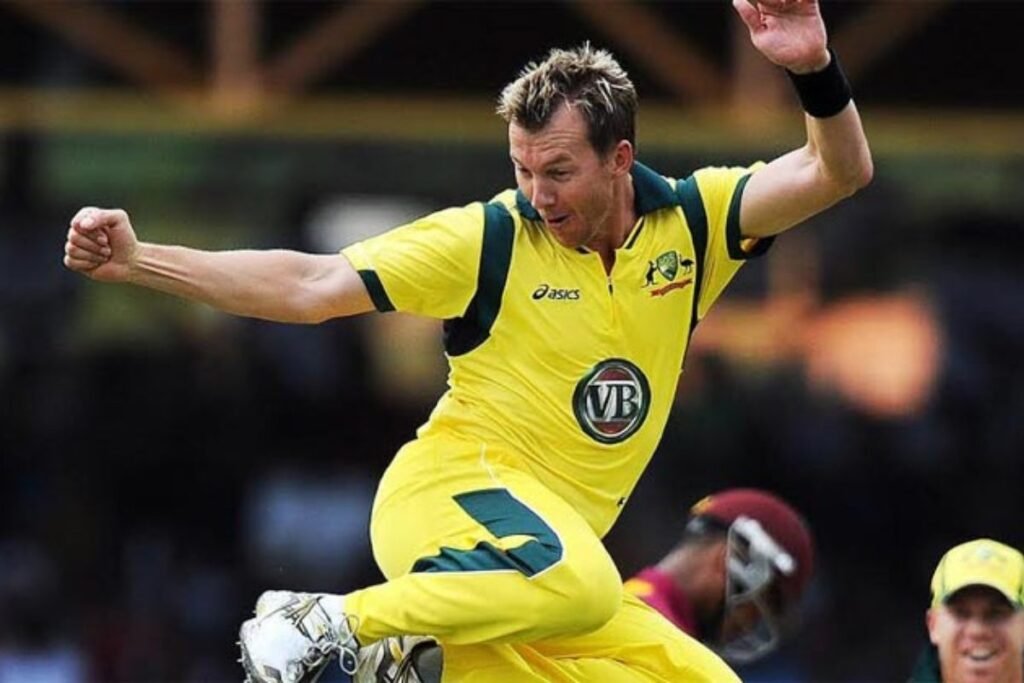
Brett Lee came closest 161.1 km/h against New Zealand in 2005. Shaun Tait matched that figure against England. Mitchell Starc has pushed past 160 km/h in select matches.
But the record belongs to the Rawalpindi Express. And it doesn’t look like moving anytime soon.
Top 5 Fastest Bowlers in Cricket History
To understand just how rare Akhtar’s record is, look at the company he keeps:
| # | Bowler | Country | Top Speed |
|---|---|---|---|
| 1 | Shoaib Akhtar | Pakistan | 161.3 km/h |
| 2 | Brett Lee | Australia | 161.1 km/h |
| 3 | Shaun Tait | Australia | 161.1 km/h |
| 4 | Jeff Thomson | Australia | 160.6 km/h |
| 5 | Mitchell Starc | Australia | 160.4 km/h |
Only three bowlers in cricket history have ever officially broken the 100 mph barrier: Akhtar, Lee, and Tait. That list has not grown since 2010.
Which Bowler Has the Highest Speed in Cricket?
The answer is still Shoaib Akhtar and it isn’t particularly close.
His 161.3 km/h delivery during the 2003 World Cup remains the highest electronically recorded speed for any bowler in international cricket. Guinness World Records officially recognises it.
What makes it even more remarkable is when it happened not in a net session or a warm up match, but in a high pressure World Cup game against England, on the biggest stage the sport offers.
That is the legacy of the Rawalpindi Express. Not just speed. But speed when it mattered most.
FAQs: YOU KNOW
Who faced Shoaib Akhtar's fastest ball?
England’s Nick Knight, during the 2003 Cricket World Cup in Cape Town the first delivery in history to officially break 100 mph.
What made Shoaib Akhtar so difficult to face?
The unpredictability. Every ball could go at the feet, the body, or the head at over 160 km/h, with less than half a second to react.