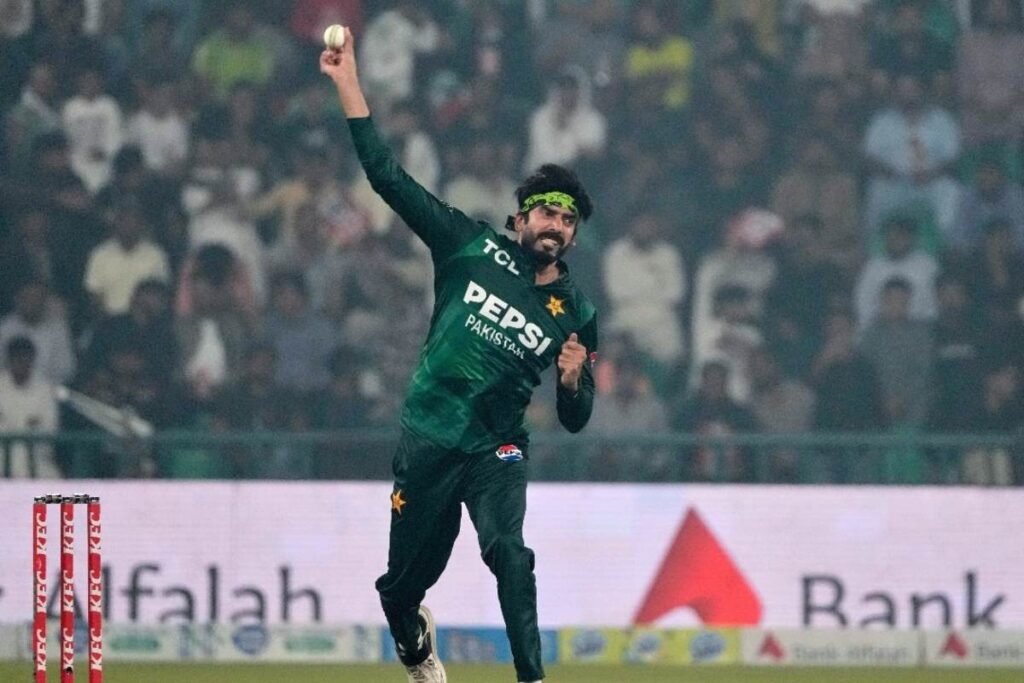
Saeed Ajmal Defends Usman Tariq what the icc rules really say, In modern cricket, few issues spark as much debate as suspicious bowling actions. Attention has once again shifted to Usman Tariq, whose unusual pause before delivery divides players, pundits, and fans across the world.
Saeed Ajmal has now entered the debate. The former Pakistan spinner understands this issue well, having faced similar scrutiny during his own career. His comments have reopened a wider discussion about how modern cricket interprets bowling laws and where the limits of legality should be drawn.
Why Usman Tariq’s Action Is Controversial as Saeed Ajmal Defends Him
The controversy surrounding Usman Tariq is not about his effectiveness with the ball, but his unusual rhythm and sudden pause before release. This movement disrupts the batter’s timing and creates uncertainty at the crease.
Batters like Daryl Mitchell have reacted to it on several occasions, even stepping away during delivery. The debate has now moved beyond the field and continues among analysts, players, and fans.
What the ICC Rules Actually Say
According to ICC regulations, bowling actions are not judged by appearance alone but through strict biomechanical testing, which measures elbow extension during delivery.
A bowler is allowed a maximum of 15 degrees of elbow extension before the action is considered illegal.
15∘15^\circ15∘
This means that even if a bowling action looks unusual or unconventional, it is still considered legal as long as it remains within the scientifically measured threshold established by the ICC.
The Saeed Ajmal Case and Its Legacy in ICC Bowling Action Rules
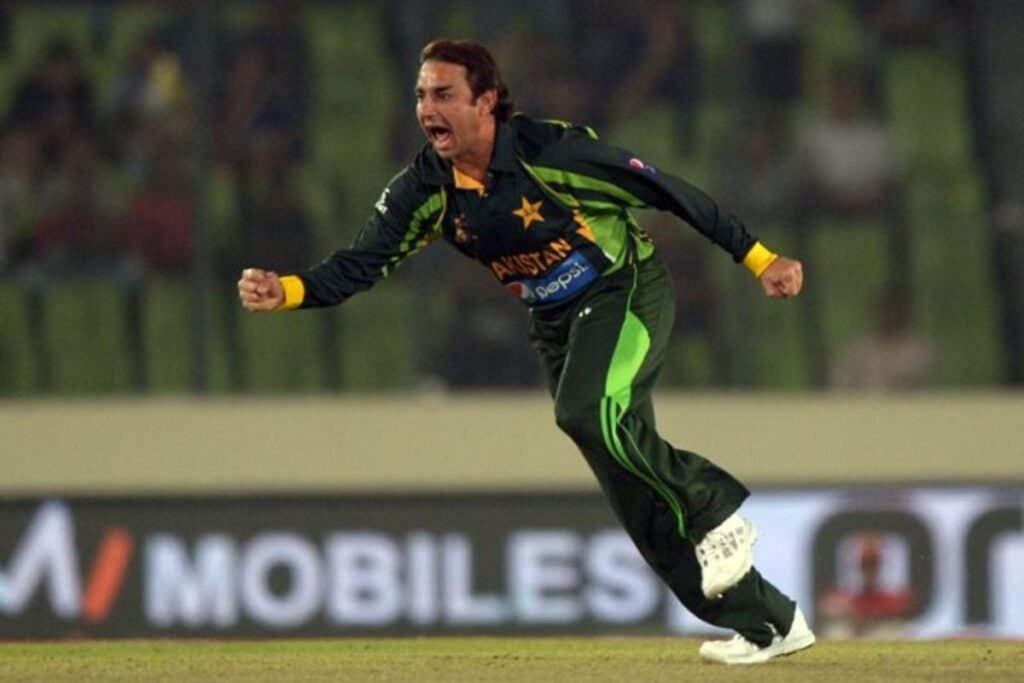
The intervention of Saeed Ajmal carries significant weight, as his career changed dramatically after his suspension in 2014 when his famous doosra was ruled to exceed the ICC’s permitted limit.
His case remains one of the most debated in modern cricket history. Many fans still compare it with other controversial bowlers, including Muttiah Muralitharan, whose action also faced heavy scrutiny before being officially cleared.
Ashwin and the Question of Fairness in Modern Cricket Bowling Rules
The debate widened when Ravichandran Ashwin raised a broader question about fairness in modern cricket. He questioned why batters enjoy more freedom in innovation than bowlers.
He pointed out that batters can play shots like the switch hit and reverse sweep without warning. Meanwhile, officials closely monitor bowlers and apply strict regulations. Many see this as an imbalance in the modern game.
Conclusion: Saeed Ajmal Defends Usman Tariq
The situation involving Usman Tariq is no longer just about one bowler or one action. It has become part of a much larger debate about how cricket is evolving. It also raises a key question about whether the rules are evolving at the same speed.
Voices like Saeed Ajmal defend players. Others like Ravichandran Ashwin question structural fairness. This clash of views makes the debate unlikely to disappear anytime soon.
The real question is simple:
Is cricket protecting its rules, or limiting its evolution?