Why was Hardik fined 12 lakh? This question didn’t just trend after IPL 2025, it exposed a gap between what fans see on the field and what actually controls the game behind the scenes, because while most people focus on runs, wickets, and results, modern cricket is equally governed by strict timing rules that can silently punish even top captains like Hardik Pandya when the margin for error disappears.
What makes this situation more interesting, and more misunderstood, is that the fine was not triggered by a dramatic incident, a heated argument, or a controversial decision, but by something far less visible yet far more critical in today’s game: time management under pressure, a factor that is now shaping outcomes, reputations, and leadership evaluations in the IPL.
Why Was Hardik Fined 12 Lakh? The Real IPL Rule Fans Completely Missed
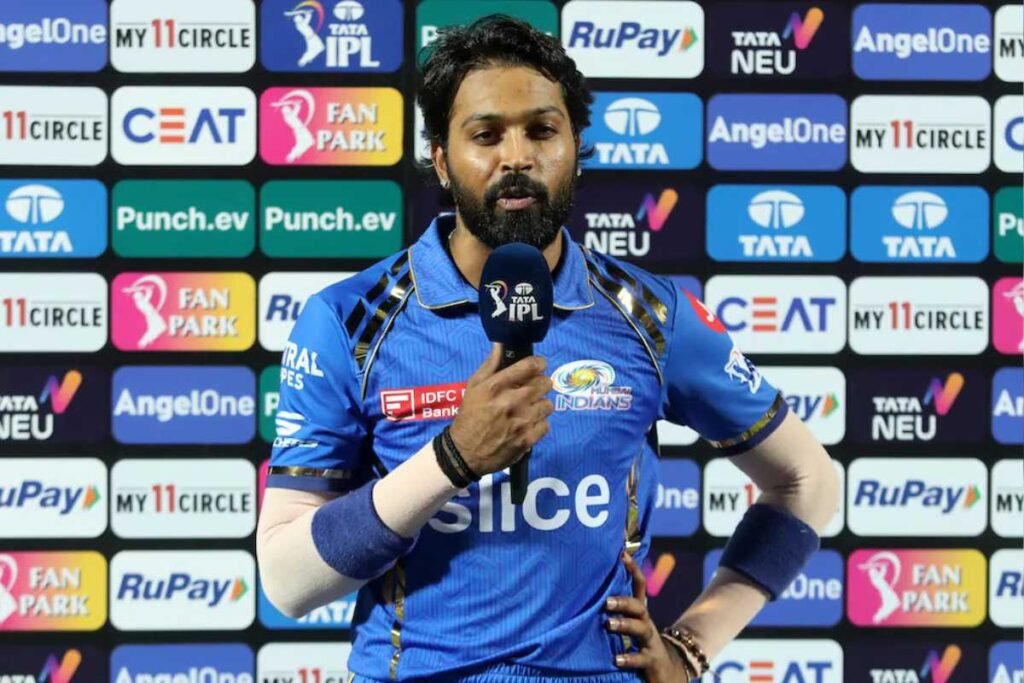
Hardik Pandya was fined ₹12 lakh after Mumbai Indians failed to complete their overs on time during a high-pressure IPL 2025 clash against Gujarat Titans. At first glance, it looks like a routine technical breach. However, slow over-rate violations carry serious consequences. They disrupt match flow, affect broadcast schedules, and challenge competitive fairness in a tightly controlled league.
Most fans overlook an important detail. This was Mumbai Indians’ first offence of the season. As a result, officials limited the punishment to a financial fine. Even so, the penalty highlights how strict the IPL system has become. Captains must not only lead tactically but also manage time with precision under constant pressure.
Why Slow Over-Rate Is the Hidden Advantage Most Fans Ignore
A slow over-rate is not just about a few extra seconds between deliveries. In modern T20 cricket, those seconds quickly add up. They disrupt match flow, affect TV timing, and break a player’s rhythm. Over time, this makes slow over-rates one of the most underrated yet influential factors in the game.
That is exactly why the IPL enforces strict penalties. When teams slow the game down, even unintentionally, they can gain small but important advantages. Bowlers get extra recovery time. Batters lose momentum. As a result, the balance of the contest shifts in subtle ways that most fans miss but professionals understand very well.
Why IPL Rules Punished Hardik: The System That Never Forgives Delays
Under IPL regulations, the captain holds full responsibility for maintaining the over-rate. Even if delays come from bowlers, field changes, or match situations, accountability always stays with the captain. This rule makes leadership in the IPL far more complex than it appears from the outside.
For a first offence, the penalty is ₹12 lakh. However, the system becomes much stricter with repeat violations. Fines increase quickly, and captains can even face suspension. As a result, what seems like a minor mistake can turn into a serious long-term problem for both the player and the team.
What Really Happened in the Match That Cost Hardik ₹12 Lakh
The penalty came during Mumbai Indians’ match against Gujarat Titans at the Narendra Modi Stadium. By that point, the game was already slipping away from MI. This context matters. Slow over-rates often come from pressure, confusion, and tactical hesitation rather than pure carelessness.
Mumbai Indians eventually lost the match by 36 runs. The result and the fine are technically separate. However, together they shaped a stronger narrative around Hardik Pandya’s captaincy. It showed how quickly performance and discipline can combine to influence public perception.
Why Was Hardik Fined 12 Lakh? What the ₹12 Lakh Fine Reveals About IPL Captaincy Pressure
This incident reveals a deeper truth about modern cricket, where captaincy is no longer just about field placements and bowling changes, but about managing time, controlling game rhythm, and making rapid decisions under extreme pressure without slowing down the match.
Hardik Pandya’s fine is not an isolated mistake, but a reflection of how demanding leadership has become in the IPL, where even small inefficiencies can translate into visible penalties, forcing captains to operate with precision that goes beyond traditional cricketing skills. . To better understand how Hardik manages responsibility and his relationships with teammates, you can read about his approach to Sanju Samson in Hardik Pandya on Sanju Samson | Leadership, trust and how they connect each other, which clearly shows how trust and leadership intertwine in team dynamics.
Why Was Hardik Fined 12 Lakh? How Fans Reacted to the Controversy
The strong reaction from fans was not really about the ₹12 lakh fine. It was about what the penalty represented. When a high-profile player like Hardik Pandya gets penalized, it sparks debates around captaincy, discipline, and whether such rules are too strict or necessary to protect the integrity of the game.
At the same time, the incident gained traction because it felt surprisingly relatable. It showed that even elite athletes can get caught out by hidden rules. These rules stay invisible until they are broken.
Why Was Hardik Fined 12 Lakh? The Truth That Changes Everything
Hardik Pandya was fined ₹12 lakh for a slow over-rate. However, reducing the incident to just a penalty misses the bigger picture. It highlights how modern cricket now values time, discipline, and structure as much as skill and performance.
In a format where margins are razor-thin, small details matter more than ever. This fine is not just a punishment. It is a signal of how the game is evolving. Even minor lapses can shape outcomes, narratives, and careers.
FAQ: YOU KNOW
Is ₹12 lakh a normal IPL penalty?
Yes, it is the standard fine for a captain’s first slow over-rate offence under IPL rules.
Why was Hardik fined 12 lakh in IPL 2025?
He was fined for a slow over-rate after Mumbai Indians failed to complete their overs within the required time limit.
Can Hardik Pandya be suspended for this?
Not for a first offence, but repeated violations can lead to suspension.
Why are slow over-rates taken so seriously?
Because they affect match timing, fairness, and overall game flow in professional cricket.
Did this impact Mumbai Indians’ performance?
Indirectly yes, as it added pressure during a match they eventually lost by 36 runs.