
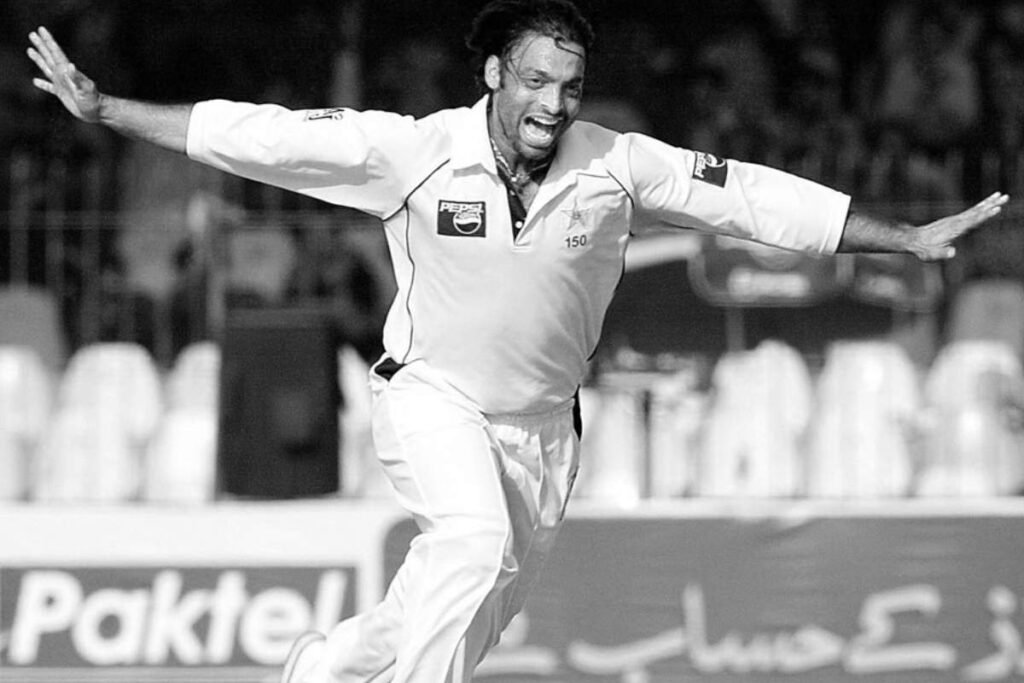
Shoaib Akhtar Run Up Length The moment the Stadium went Silent
Shoaib Akhtar run up length was never just a technical part of fast bowling. For batsmen standing at the crease, it was the moment when tension slowly filled the stadium.
Before the ball was even delivered, the Rawalpindi Express would begin his long sprint from nearly 40 yards away, building rhythm step by step. The crowd could see it. Fielders could feel it. And the batsman knew exactly what was coming extreme pace.
As Akhtar accelerated toward the crease, every stride added momentum. By the time he reached the bowling line, the energy built through his run up had already turned his delivery into one of the most feared weapons in cricket.
It was this same explosive approach that eventually produced the fastest ball ever recorded in international cricket: 161.3 km/h during the 2003 World Cup. But the real story of his run-up goes beyond just numbers.
The 40-Yard Sprint that built the Rawalpindi Express
Many fast bowlers rely on rhythm and controlled approaches, but Akhtar’s style was different. His run up was long, aggressive, and almost theatrical.
Starting from deep in the outfield, he would begin a powerful sprint that covered around 40 yards, one of the longest run ups used by an international fast bowler.
Each step helped him build speed and momentum. His body worked like a chain reaction: legs driving forward, hips rotating, shoulders turning, and finally the arm whipping through with explosive pace.
For batsmen watching him charge in, it often felt like facing a storm that was getting closer with every second.
For fans curious about pace battles, check out our detailed story of Kohli vs Shoaib Akhtar: The untold rivalry, exploring moments that never happened on the pitch
When the run up turned Into the Fastest Ball in Cricket
One moment perfectly captures why Akhtar’s run up became legendary. During the 2003 Cricket World Cup, Pakistan faced England. As Akhtar began his familiar long sprint toward the crease, there was already excitement in the air.
Want to see Akhtar’s dominance against aggressive batsmen? Explore the stats of Shoaib Akhtar vs Sehwag records and how the Rawalpindi Express challenged India’s explosive opener.
The delivery that followed was clocked at 161.3 km/h, officially the fastest ball in cricket history. But that moment did not happen by accident.
The speed came from the momentum created by the long run up, the perfect timing of his bowling action, and the explosive energy released at the crease.
It was the culmination of a style that combined raw athletic power with fearless fast bowling
Why batsmen felt the pressure before the ball was bowled
Facing a bowler like Akhtar meant dealing with more than just the speed of the delivery. The Shoaib Akhtar run up length itself created psychological pressure. As he started running:
the crowd’s noise often faded
fielders became alert
the batsman prepared for extreme pace
Those few seconds while he sprinted toward the crease felt much longer for the player at the other end. Some batsmen later admitted that the tension began the moment Akhtar started running, not when the ball was released
What Sourav Ganguly Said about Shoaib Akhtar’s run up
Over time, Akhtar’s run up became one of the most recognizable sights in the sport.
Fans remember the long sprint, the explosive release, and the moment when the ball rocketed toward the batsman at terrifying speed.
Many bowlers have been fast in cricket history, but very few have made their approach to the crease part of the spectacle itself.
Shoaib Akhtar’s run up was not just a preparation for the delivery.
It was a warning.
FAQ: YOU KNOW
How did Shoaib Akhtar train to bowl so fast?
Shoaib Akhtar followed extremely intense training routines. He focused on sprint drills, strength workouts, and long distance running to build stamina and explosive power for fast bowling.
Did Shoaib Akhtar run in the rain to improve his speed?
Yes. Akhtar has mentioned in interviews that he sometimes practiced sprinting in difficult conditions, including running in the rain, to improve balance, endurance, and leg strength.
Did Shoaib Akhtar use supplements or performance drugs for speed?
Akhtar often emphasized that his pace came from natural strength and intense training, particularly heavy gym sessions and powerful leg workouts rather than relying on chemical substances.
What kind of gym training helped Shoaib Akhtar bowl faster?
His workouts focused on leg power, core strength, and explosive movements such as squats, sprint training, and high intensity conditioning, which are essential for fast bowlers. If you’re inspired by his legendary pace, check out our guide to Learn the Shoaib Akhtar bowling technique, covering run up, action, and fitness tips.
Why was Shoaib Akhtar’s fitness routine important for his run up?
His famous 40-yard run up required exceptional stamina and strength. Without strong legs and conditioning, maintaining that speed and momentum throughout the run up would have been impossible.