
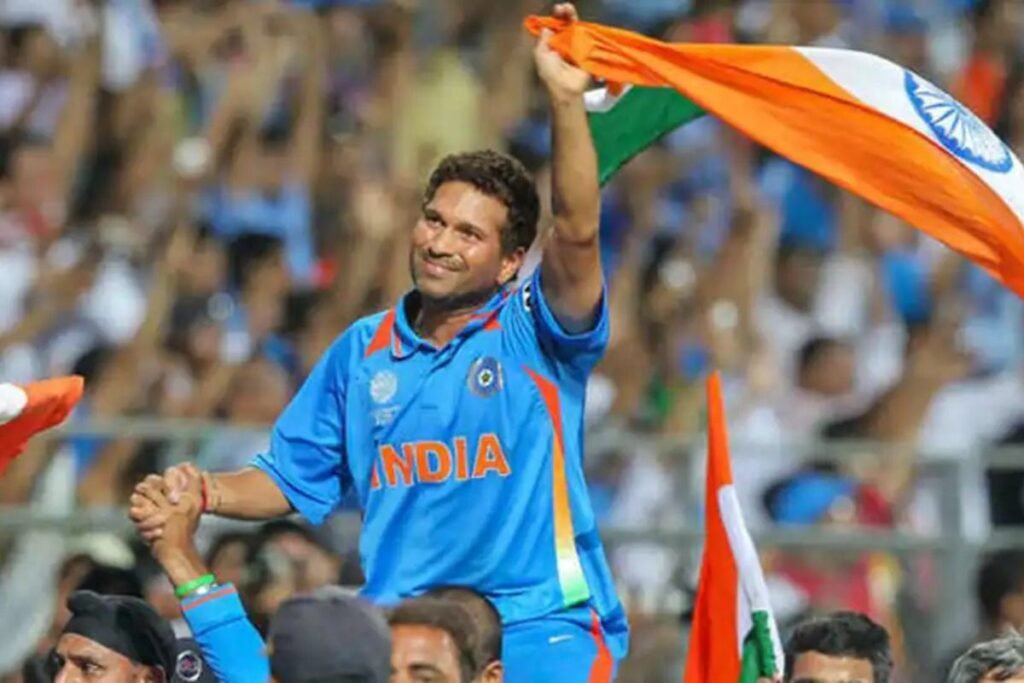
Why Sachin Tendulkar is Called the God of Cricket? From the crowded streets of Mumbai to the grand stadiums of the world, Sachin’s journey tells a story of relentless determination, unmatched talent, and a deep passion for cricket. He became a living legend whose name evokes reverence, not only among fans but also among fellow players, coaches, and cricket pundits.
Every run he scored, every century he made, and every match winning performance contributed to an aura that went far beyond statistics and records. As a result, he emerged as an icon whose influence and inspiration continue to shape generations of cricketers and millions of cricket lovers around the globe.
Why Sachin Tendulkar is Called the God of Cricket? Early talent and rigorous training
April 24, 1973 marks when Sachin Ramesh Tendulkar entered the world in Mumbai, showing signs of something special almost right away. His coach, Ramakant Achrekar, shaped those raw sparks with steady hands, demanding more than just casual effort. Practice stretched far beyond normal limits hours poured into straight drives, delicate moves of the wrists, standing firm against rapid bowling in training sessions. By fifteen, most kids are still figuring things out; he was already playing for India in youth teams, squaring off against fierce pace from Pakistan and Sri Lanka. One moment stood out sharply a knock of 325 not out in a school level game, part of the Harris Shield tournament. That innings did not scream glory loudly, yet it whispered promise: here was skill, yes, but also nerves made strong before their time. Pressure came early, so did his answer to it. What looked like instinct carried layers of preparation underneath.
Why Sachin Tendulkar is Called the God of Cricket? Breaking records and setting new standards
He played for India longer than most careers last, shaping the game in ways few could imagine. Across nearly two and a half decades, he scored more than thirty four thousand runs across all formats.
He stacked centuries: fifty one in Tests and forty nine in ODIs. He became the first player to score a double hundred in one day cricket. Matches turned into records, and records turned into history. He also played 200 Test matches, a milestone no one had reached before.
Calmness stayed with him even under intense pressure. Chasing big totals seemed ordinary when he batted. People noticed. Players like Brian Lara, Ricky Ponting, and Virender Sehwag called him beyond great. The nation honored him with the Bharat Ratna, recognizing not only his runs but also the deeper meaning he brought to Indian cricket. Sachin became a symbol of national pride and the first athlete ever to receive this award.
Facing legends like Wasim Akram, Sachin’s strokeplay was simply mesmerizing. Curious about how many sixes he hit against Wasim Akram?
Why Sachin Tendulkar is Called the God of Cricket? Iconic matches and game changing innings
Out in Sharjah during that fierce desert storm, Sachin stood tall when most players would have stepped back. His knock against Australia wasn’t just about runs; it reshaped how people saw one player perform under fire. Years later, in Mumbai, fireworks lit up the sky after the 2011 World Cup Final. His century became more than numbers it created shared joy across millions of fans.
Time and again, he faced express fast bowlers whose skill and pace challenged even the best. Wasim Akram’s guile, Glenn McGrath’s precision, Shoaib Akhtar’s raw speed none could find an easy target. Even without words, Sachin’s daily grind taught younger players that greatness hides in repetition and silence. Long after the crowds faded, those habits echoed in training grounds, where focus replaced flash. One shot at a time, one game at a time, he rewrote calmness under siege. History repeatedly confirmed his greatness not just fans’ applause.
Sachin’s battles with fast bowlers were the stuff of legends, much like the epic duels discussed in Shoaib Akhtar Virender Sehwag Baap Baap, where pace, skill, and nerves created unforgettable cricket moments.
Why Sachin Tendulkar is Called the God of Cricket? Emotional connection and global influence
Nowhere was his impact felt more than in living rooms, where entire families would stop whatever they were doing whenever he stepped onto the field. It wasn’t just records or wins that made people follow him whole crowds found their voice shouting his name until rooftops shook. From backyard alleys to distant cities, kids shaped their swings around how he stood at the crease, calm and focused, never rushing. Leagues sought him out, not because rules said so, but because having him meant something bigger a presence that lifted everyone nearby. Long after he left the pitch, voices still rise when his old innings come on screens, hands tracing the path of cover drives remembered like hymns. Coaches point to his footwork during drills, younger batters copy his stance without knowing why it simply feels right. The man became more than player status; time has turned moments into lessons, actions into references, silence between deliveries into shared memory. His name now lives beyond sport, carried quietly in habits, choices, the way excellence gets defined.
The eternal God of cricket
Sachin Tendulkar earns the title not through empty praise, yet through years shaped by relentless effort. His skill stood out, though it was consistency under pressure that defined him most. Matches unfolded around his calm presence, where technique met nerve in tight moments. Respect grew quietly, built more on conduct than words spoken loud. Across decades, facing fierce bowlers worldwide, he stayed firm without seeking spotlight. Millions watched, moved less by numbers and more by how he carried himself when challenged. Records came along, yes, but so did quiet examples of discipline repeated daily. What remains now isn’t just stats saved online, rather values shown through action patience, purpose, care for craft. People recall innings played long ago, still feeling their weight today. Greatness here didn’t arrive fast, instead arrived steady, season after season. So calling him divine feels accurate, not due to worship but observation one man reshaped belief about what’s possible through sheer will blended with grace.
FAQ: YOU KNOW
Did Sachin really score 325 not out in school cricket?
Yes, in the Harris Shield inter school match, signaling his prodigious talent long before international fame.
Why do cricketers call him God of Cricket?
Because of his consistency, mental toughness, strategic brilliance, and ability to inspire generations.
What is Sachin’s most iconic century?
The 2011 World Cup Final century, which brought India the trophy and united the nation.
How did Sachin influence cricket culture in India?
By mentoring young cricketers, inspiring fans, and raising standards, he created a lasting cricket culture in India.
What honors recognize his legendary status?
He received the Bharat Ratna, multiple Wisden awards, and numerous global accolades for his contributions to cricket.